
QAWTS PROGRAM - (QUEER ASIAN WOMEN & TRANSGENDER Support)
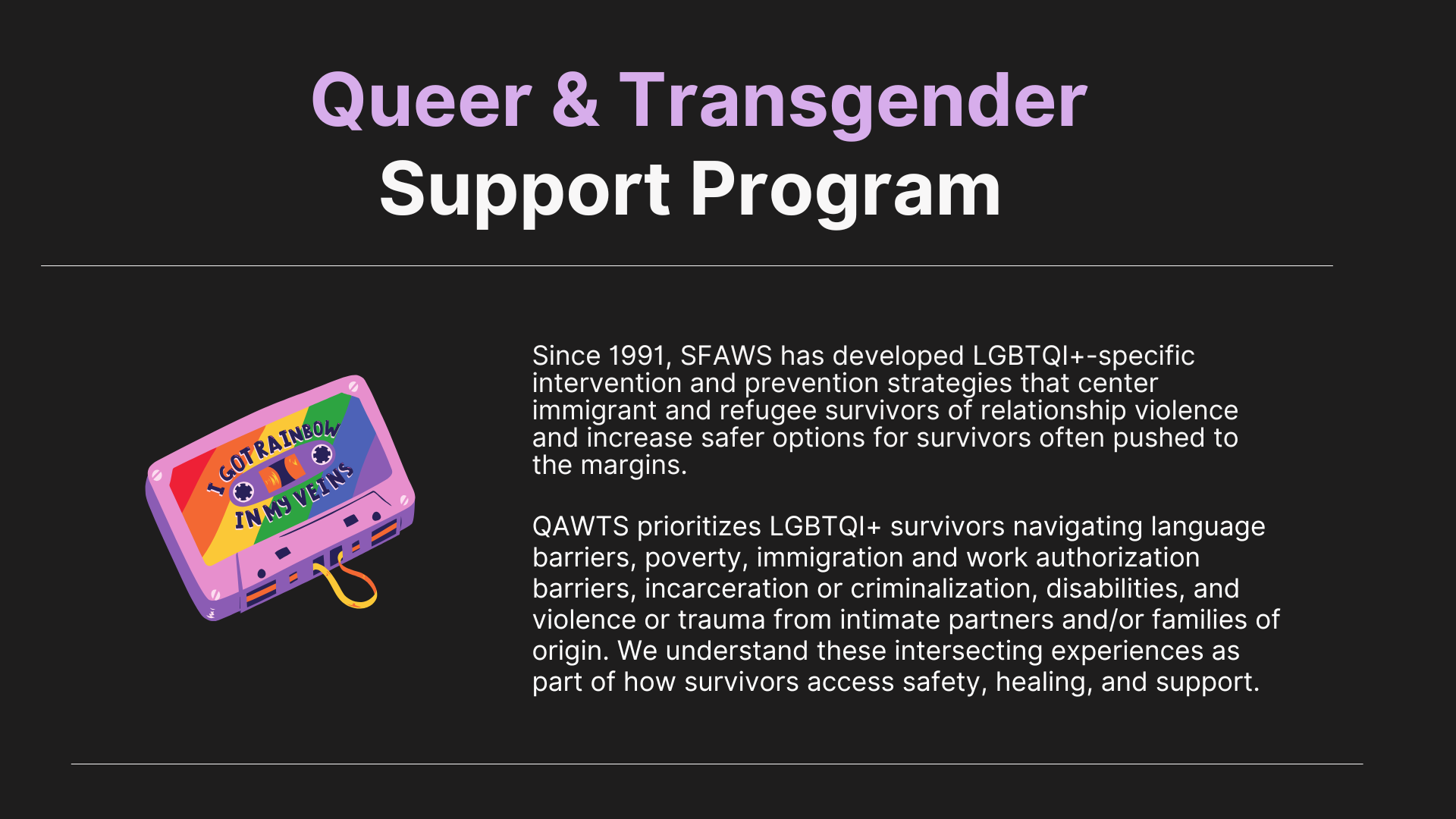
Supporting LGBTQI+ survivors of intimate partner violence, relationship abuse, and human trafficking.
Asian Women’s Shelter has a long history of supporting LGBTQI+ survivors of relationship violence. Beginning in the early 1990s with lesbian-specific services, this work later grew into Queer Asian Women’s & Transgender Services (QAWTS) and continued to evolve to more explicitly include transgender survivors and broader LGBTQI+ communities.
For more than three decades, this work has brought together two important parts of ending relationship violence: supporting survivors directly and working within our communities to prevent violence and reduce isolation.
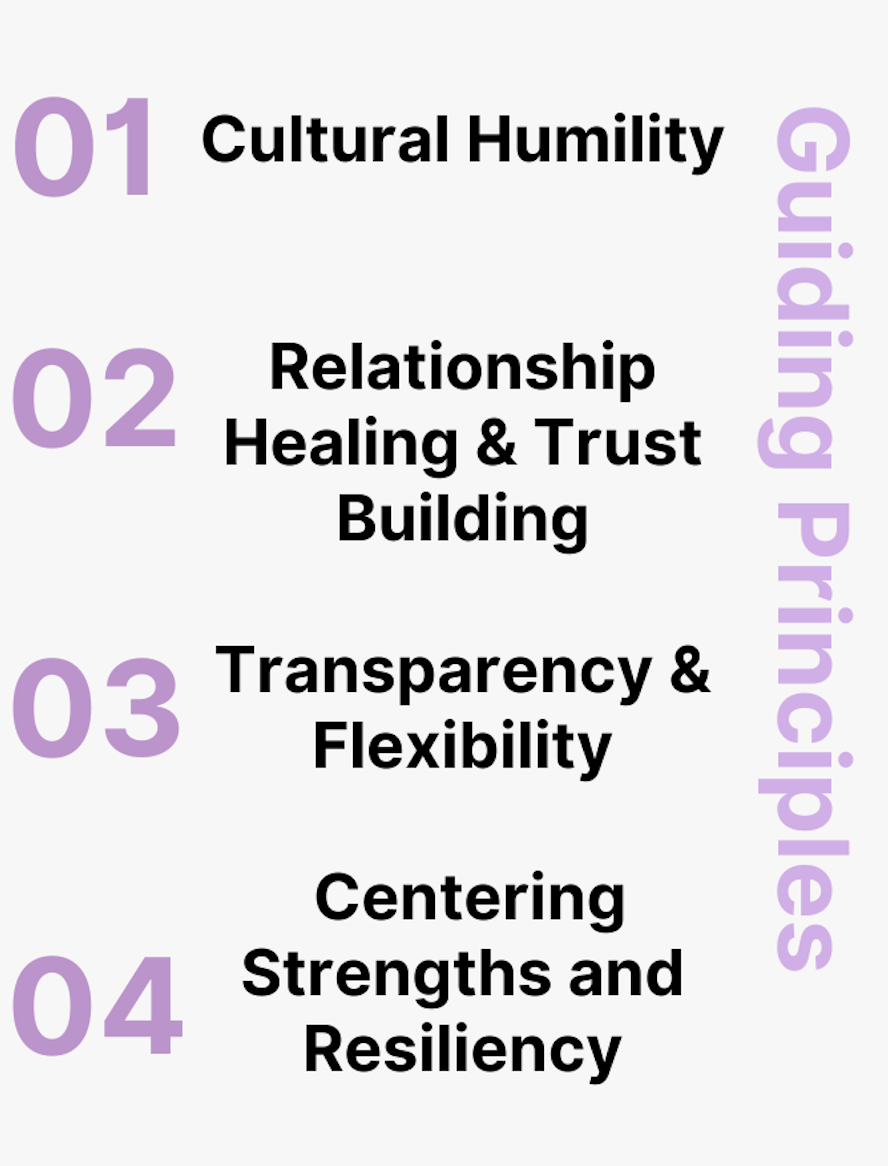
Earlier QAWTS prevention efforts included Chai Chats, which brought queer community members together to talk about healthy relationships, communication, conflict, and relationship violence, and Homophobia Busters, which engaged allies in Asian immigrant and refugee communities to challenge homophobia and heterosexism.
Today, QAWTS continues and builds on this history through LGBTQI+ peer advocacy, community-based case management, Rainbow Healing peer support, and community education and prevention.
While the program has evolved as our communities and their needs have changed, a core belief remains: LGBTQI+ survivors deserve support where their identities, relationships, cultures, languages, and communities are understood as part of safety and healing.
What QAWTS Does Today?
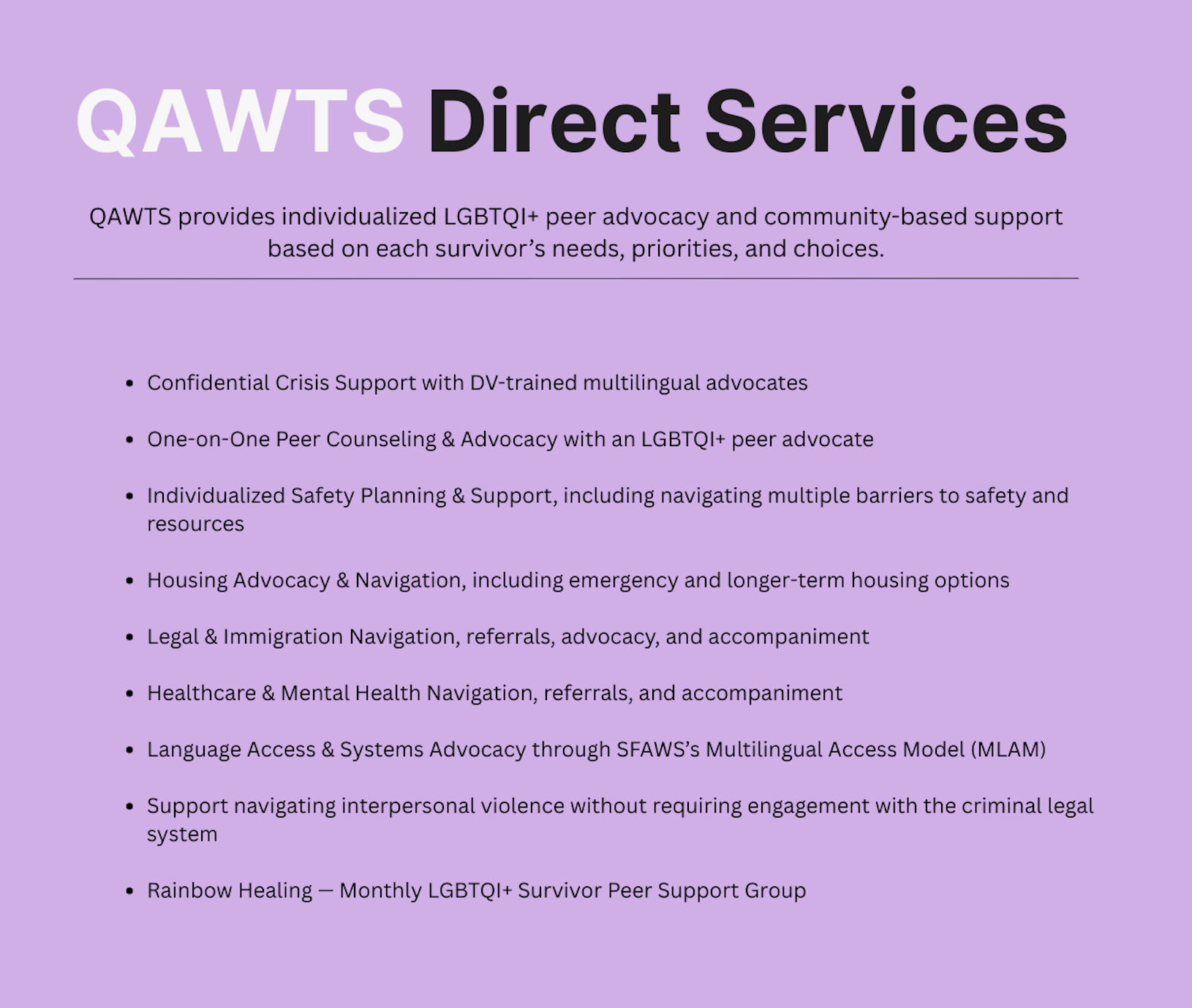
QAWTS provides survivor-centered, culturally responsive support for LGBTQI+ survivors of intimate partner violence, relationship abuse, and human trafficking.
We understand that relationship violence does not happen in isolation. LGBTQI+ survivors may also be navigating transphobia, homophobia, racism, immigration systems, language barriers, housing instability, disability, economic insecurity, healthcare access, or rejection from family and community.
These experiences can shape how violence happens, what resources are accessible, what choices feel possible, and what safety means for each survivor.
QAWTS works alongside survivors while also strengthening the communities and systems around them. Our work today has two connected parts:
Intervention & Healing — direct advocacy, peer support, safety planning, systems navigation, and community healing with LGBTQI+ survivors.
Prevention & Community Education — working with friends, families and chosen families, community organizations, healthcare and legal providers, and others to better understand LGBTQI+ relationship violence and build stronger networks of support.
Intervention & Healing
One-on-One Advocacy & Peer Support
QAWTS provides individualized advocacy, peer counseling, and community-based case management for LGBTQI+ survivors.
Our LGBTQI+ peer advocates understand that queer and trans relationships can have unique dynamics. Abuse may involve a survivor’s gender identity, sexuality, immigration status, chosen family, access to LGBTQI+ community, or fear of discrimination from service providers and formal systems.
Survivors should not have to explain or defend their identities in order to receive support.
We meet each person where they are and work alongside them to identify their own priorities. Depending on a survivor’s needs, QAWTS support may include:
Safety planning and emotional support
Housing advocacy and housing navigation
Immigration and legal service navigation
Referrals and accompaniment to legal services
Healthcare and mental health referrals and accompaniment
Public benefits and employment advocacy
Language access, advocacy, and interpretation through AWS’s Multilingual Access Model
Connection to LGBTQI+, culturally specific, and other community resources
Limited financial and basic-needs assistance when available
Our approach is flexible and relationship-based. Sometimes advocacy means helping someone navigate a complicated housing or legal system. Sometimes it means accompanying someone to an appointment, helping make a difficult phone call, finding transportation, or continuing to look for options when a referral does not work out.
Safety Is More Than Leaving
Leaving an abusive relationship is not always simple—and leaving does not automatically mean that someone is safe.
For LGBTQI+ survivors, creating safety may also mean navigating multiple layers of marginalization while trying to access resources and support.
A survivor may be considering questions such as: Where can I live safely? Will a shelter respect my gender identity? What happens to my immigration status? Can I afford to leave? Will my family or community support me? Will the police, courts, healthcare providers, or other systems understand my relationship and treat me with respect?
These realities can shape what options are available and what feels possible.
That is why QAWTS understands safety planning as much more than making a plan to leave a relationship. We work with survivors to look at the whole situation—their relationships, identities, communities, resources, risks, hopes, and priorities—and explore options together.
There is no single right way to survive, leave, stay, or heal. Survivors are the experts in their own lives.
Rainbow Healing
LGBTQI+ Survivor Peer Support Group
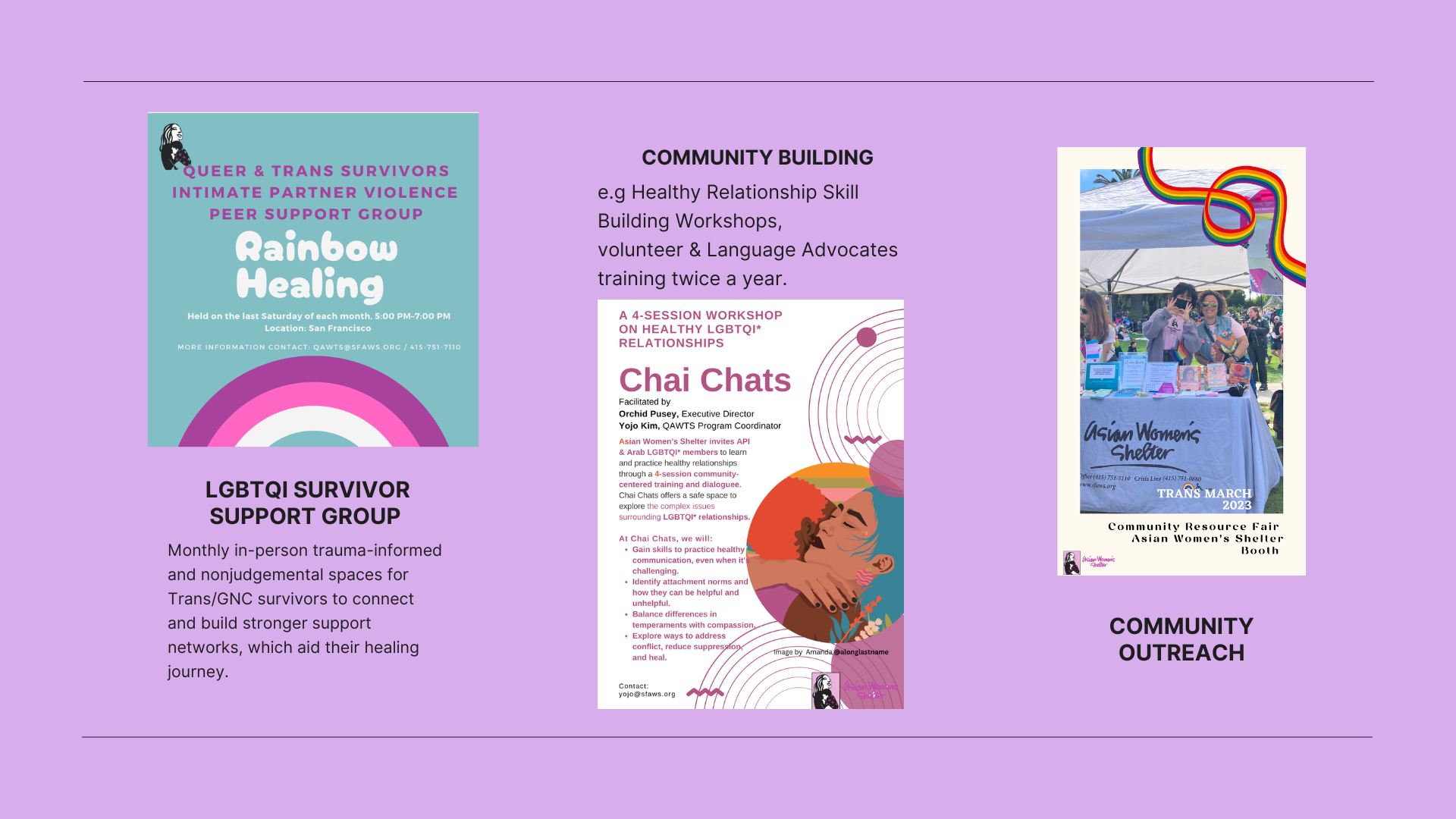
Rainbow Healing is a confidential, monthly in-person peer support group for LGBTQI+ survivors of intimate partner violence, relationship abuse, and human trafficking.
Healing does not happen only through appointments, referrals, or crisis intervention. Healing can also happen through creativity, relationships, laughter, reflection, and being in community with people who understand.
Rainbow Healing brings LGBTQI+ survivors together to express ourselves, build connection, and explore healing in community.
Gatherings may include:
Healing-centered art and creative activities
Grounding and embodied practices
Relationship and communication skill-building
Conversations about boundaries, relationships, safety, and healing
Peer connection and mutual support
Opportunities for reflection, self-expression, joy, and community-building
There is no pressure to tell your story or share more than you want to. Participants are invited to engage at their own pace and in ways that feel comfortable.
Rainbow Healing is a space to connect, create, learn from one another, and imagine life beyond survival.
Prevention & Community Education
Chai Chats: Building Communities of Support
Supporting survivors is only one part of ending relationship violence.
LGBTQI+ survivors often turn first to the people already in their lives—a friend, chosen family member, healthcare provider, attorney, community worker, teacher, neighbor, or someone they trust.
How that person responds can make a meaningful difference.
Through Chai Chats, QAWTS offers free workshops, trainings, and community conversations to strengthen our collective ability to recognize relational harm and support LGBTQI+ survivors with understanding, care, and respect for their self-determination.
QAWTS welcomes partnerships with:
LGBTQI+ and community-based organizations
Medical and mental health providers
Legal service providers
Community and cultural centers
Schools and service providers
Groups of friends, families, and chosen families
Anyone interested in creating safer and more supportive communities for LGBTQI+ survivors
Bring a Chai Chat to Your Community
QAWTS is always looking to build relationships with community partners, providers, friends, families, chosen families, and community members.
Reach out to QAWTS to learn more about hosting a free workshop, training, or community conversation.
Connect With QAWTS
Looking for Support?
If you are an LGBTQI+ survivor experiencing relationship violence or human trafficking—or you are unsure whether what you are experiencing is abuse—you are welcome to reach out. You do not need to have everything figured out. You do not need to have decided whether to leave your relationship. We can start with a conversation about what is happening and what kind of support might feel helpful.
QAWTS Program Asian Women’s Shelter
24-Hour Crisis Line:
1-877-751-0880
Email: QAWTS@sfaws.org
Making a Referral
Community providers are welcome to contact QAWTS to discuss a potential referral.
Whenever possible, please speak with the survivor before sharing their contact information and confirm what method of communication is safe for them.
After connecting, a QAWTS advocate will talk with the survivor about their needs, priorities, and immediate safety concerns. If QAWTS is not able to provide the support someone needs, we will do our best to explore other options and community resources together.
Interested in a Workshop or Community Partnership?
We would love to hear from community organizations, healthcare providers, legal providers, community centers, friends, families, chosen families, and others interested in learning more about supporting LGBTQI+ survivors. Contact QAWTS to learn about Chai Chats workshops, trainings, and community conversations.